How professional wrestling went global
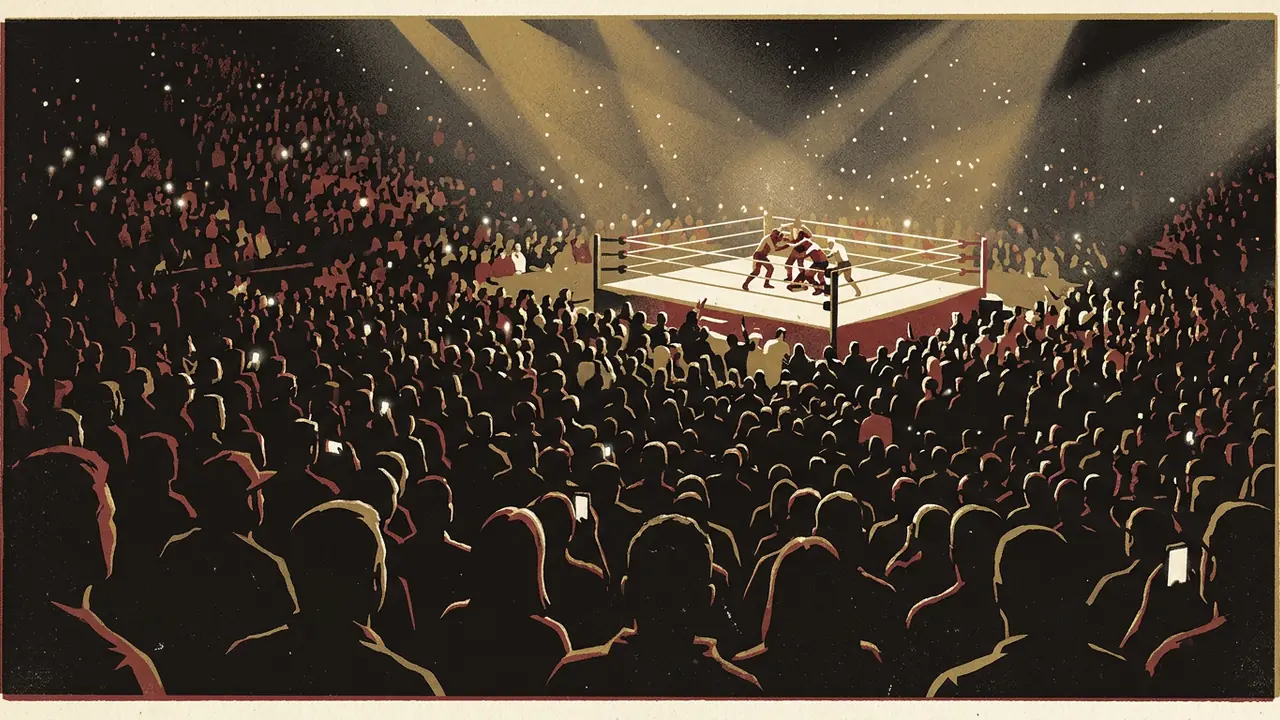
Professional wrestling went global the way most entertainment businesses did: a promoter with a proven product found a local partner and rented the market. What makes the wrestling version unusual is how much the product changed each time it landed, and how much of that change traveled back. The history of the sport's spread is less a story of one company conquering the world than of a template that every region rewrote on arrival.
The export template
The classic model was simple. A promoter holding a recognized championship sent the titleholder on tour; a local promoter supplied the building, the licensing, the undercard, and the challenger. The visitor was the attraction, the local was the hero, and the money came from the collision between them.
The National Wrestling Alliance formalized this arrangement. Member promotions recognized a single world champion, and that champion's schedule was genuinely global. Lou Thesz defended the NWA title in Japan, Australia, Mexico, and Europe, among other stops, which gave the belt weight in places that had never seen the holder's home territory. Japan's postwar boom ran on the template almost literally: Rikidōzan's promotion built its biggest nights around visiting American champions, and the foreign titleholder as a final boss became a permanent fixture of Japanese booking.
Why the model worked
Importing one star was far cheaper than building a national touring company from scratch. The local promoter already knew the market, the language, and the regulators. The visitor brought novelty and a claim to legitimacy that a hometown champion could not manufacture on his own — and he went home with a cut of a gate he could never have drawn by staying put.
| Region | What arrived | What stayed local |
|---|---|---|
| Britain | Touring titleholders and American-style championship claims | Rounds, public warnings, decisions on points |
| Japan | U.S. champions booked as the ultimate obstacle | Native heroes and Japanese-language storytelling |
| Mexico | The imported ring and fall structure | Masks, wagers, and the técnico–rudo divide |
| Australia | Visiting champions on world tours | Its own television-driven promotion |
Local adaptation
Rules were the first thing to bend. British wrestling built its television era around rounds, public warnings, and decisions awarded on points, a system codified in the postwar years and enforced by a joint promotions committee. A wrestler could lose a match without ever being pinned, and the referee's count of rounds mattered as much as any hold.
Mexico kept the ring and the three-fall match but reworked the presentation. Masks became the central currency of the business, and a mask-versus-mask wager could carry a feud for a year. The técnico and rudo roles gave the audience a moral map that needed almost no explanation.
Language decided who could be the hero. A visiting American was never going to be the hometown favorite in Osaka or Mexico City, so promoters cast him accordingly. The same performer who headlined as a babyface in one country worked as the arrogant outsider in another, often within the same month.
The foreigner as antagonist
Japan's version of the export template inverted it. The imported champion stopped being the attraction-hero and became the obstacle that a native star had to overcome. That single adjustment turned a booking convenience into a national narrative, and it produced a durable character type: the dominant foreigner whose defeat is the point of the story.
The two-way exchange
The traffic was never one-directional. British and Irish workers such as Dynamite Kid, Fit Finlay, and William Regal carried the World of Sport style into North America and Japan, and the mat-based, hold-for-hold approach they brought with them is visible in the workrate standard that followed.
Japan sent wrestlers abroad to learn and brought them home as hybrids. Satoru Sayama's Tiger Mask took a Mexican mask, a Japanese junior heavyweight pace, and a manga-derived gimmick and became one of the most copied acts in the business. Último Dragón built an entire career on the same bridge between Japan and Mexico.
Mexico exported luchadores north along established routes, and by the 1990s the light heavyweight and cruiserweight divisions in the United States were built largely on Mexican and Japanese talent and on the faster, higher-risk style both scenes had developed. Styles that had been local dialects were now shared vocabulary.
Television and satellite
Television solved the reach problem and created a new one. Once a promotion's weekly show was in every living room, the live gate stopped being the main business, and the question became who controlled the screen. In Britain, ITV's World of Sport made household names of wrestlers who rarely worked outside the country. In Mexico, Televisa carried lucha libre into national culture. In Japan, broadcasters turned specific events into annual rituals.
The promotion becomes the destination
Cable and satellite let a single company project the same show into dozens of countries at once, and the World Wrestling Federation built its international business on exactly that. A stadium show in London, a working relationship with a Japanese promotion, and television deals in markets with no local partner changed the direction of travel: instead of a champion going out to a local promoter, the promotion itself became the destination.
The internet era
Before streaming, the global conversation ran on tape trading. Fans copied shows onto VHS and mailed them across borders, and a Japanese or Mexican card could circulate for years before it reached an audience that spoke its language. Those networks were small, slow, and enormously influential on the workers who came up inside them.
Streaming collapsed the delay. A major show in Tokyo is now watched live on the same night on every continent, and the argument about it happens in one place. Promotions that once depended on a local broadcaster can sell a subscription directly to a fan eight time zones away.
The result is a circuit that looks less like a set of national industries and more like a single market with regional dialects. A move invented in one country is copied everywhere within a week, and the historical styles described above survive mostly as accents — the British mat sequence, the lucha rope work, the Japanese strike exchange — that workers borrow from each other freely. The template that once moved champions between markets now moves ideas between them at the speed of a feed.