Professional wrestling in the 2010s
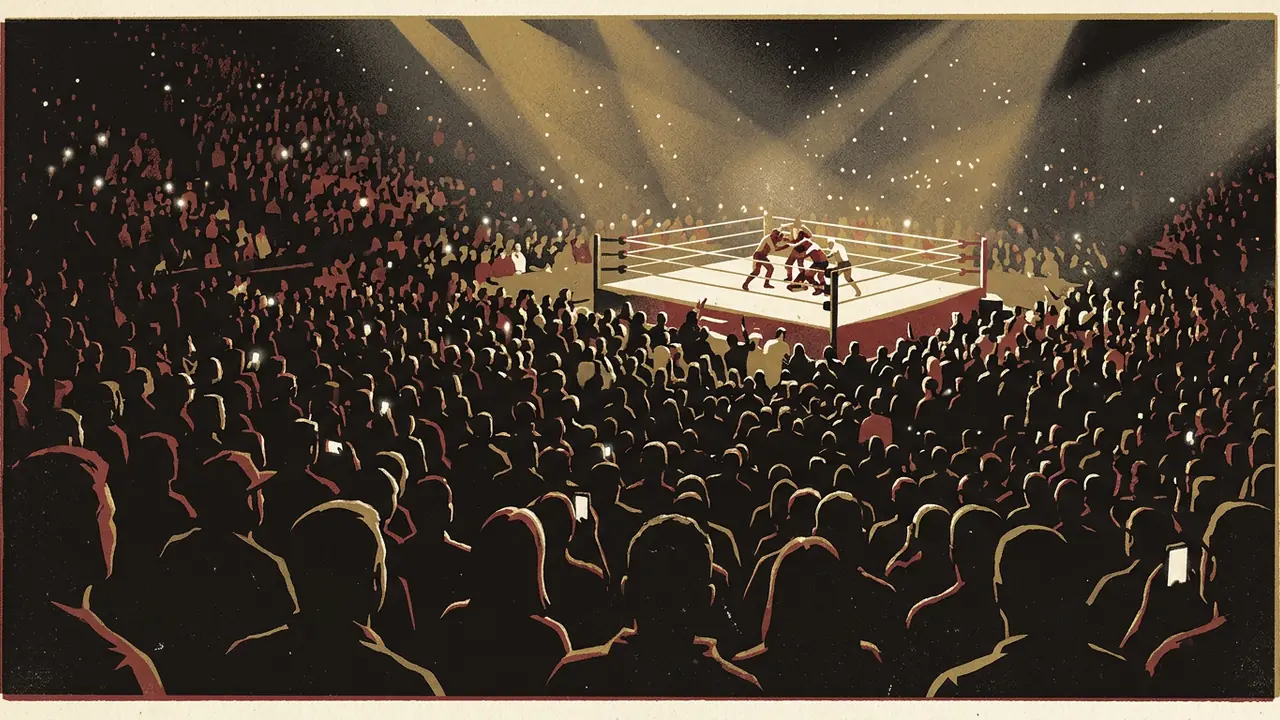
Something inverted in the 2010s. For most of professional wrestling's history, the biggest company trained its own talent and the independents absorbed whoever was left over. By the end of the decade the current ran the other way: the independents developed the wrestlers, streaming carried their footage to a global audience, and the largest promotions hired from that pool rather than building from scratch. The same ten years rebuilt the women's division from an afterthought into a main event, and changed what fans expected to know about the business before they watched it.
The independent boom
The number of viable independent promotions grew steadily through the decade, and more importantly, so did their reach. Pro Wrestling Guerrilla in Reseda, Ring of Honor, Chikara, and Evolve in the United States; Progress, ICW, and Revolution Pro in Britain; wXw in Germany. None of them were new in kind. What changed was that a promotion with a few hundred seats could sell footage, shirts, and tickets to people who would never attend a show.
The shared roster problem, and the advantage
Because so many promotions booked from the same pool, a wrestler could work a dozen companies in a year and build a following without ever signing a contract. That made the independents a de facto development system, whether or not anyone intended it. It also meant that a good match in a small hall could circulate widely within days, which is the closest thing the decade had to a scouting report.
The economics stayed modest. Few independent promotions turned meaningful profits, and the touring calendar was brutal on the performers who chased it. But visibility, not money, was the point. Being seen was the asset, and for the first time the independents controlled the means of being seen.
Streaming and the subscription model
WWE launched its own subscription network in February 2014, priced at $9.99 a month and built around a back catalog that had previously existed only on tape and DVD. The archive was the hook, but the live pay-per-views and the weekly shows were the reason to keep paying. It was a bet that recurring revenue from a large audience beat one-off buys from a smaller one, and the rest of the industry read it as a signal.
Others followed. New Japan Pro-Wrestling built a service that gave Western fans legal access to cards that had circulated for years as grey-market imports. Ring of Honor, Progress, and a cluster of smaller promotions launched their own subscription platforms, and streaming outlets began aggregating independent libraries. A fan in Manchester or Melbourne could now follow a promotion in California week to week.
The secondary effect was on NXT. A small developmental show with a cult following became a weekly fixture on the network, then a touring brand with its own live specials. Talent that had been signed for potential was suddenly performing in front of a paying, subscribing audience that judged it immediately. The gap between "developmental" and "television product" closed, and the pipeline narrowed accordingly.
The women's division rebuild
The change did not begin with a booking decision. It began with a hashtag. In early 2015, after a short and dismissive match on Raw, fans pushed the phrase #GiveDivasAChance into wider circulation, and the criticism landed on a company that had spent years treating its women as a bathroom break. The response was slow and uneven, but it was real.
From hashtag to main event
WWE retired the Divas Championship at WrestleMania 32 in 2016 and replaced it with a Women's Championship, a symbolic change that nonetheless mattered. The work underneath came from NXT, where Charlotte Flair, Sasha Banks, Becky Lynch, and Bayley had been given time and stories rather than filler. Charlotte and Sasha wrestled inside a Hell in a Cell structure in 2016, the first women's match to do so. A women's Royal Rumble match followed in 2018, and an all-women pay-per-view, Evolution, later that same year. In April 2019, Lynch, Flair, and Ronda Rousey closed WrestleMania.
Outside WWE, the shift was less abrupt because it had started earlier. Impact Wrestling's Knockouts division had treated women as serious performers for years. Shimmer, Japan's Stardom, and a growing circuit of women's independents gave performers places to work when the big promotions would not book them. That infrastructure is what made the main-roster rebuild possible: by the time WWE wanted a women's division, there was a generation of wrestlers who had already been trained to carry one.
Global talent flow
Borders thinned in both directions. New Japan's Bullet Club, a stable of mostly foreign wrestlers, became one of the most recognizable brands in the sport through merchandise and clip culture, and the group's leaders became draws in the United States. Kenny Omega's 2016 G1 Climax win made him the first non-Japanese winner, and his match with Chris Jericho at Wrestle Kingdom in January 2018 put a New Japan card in front of a Western audience that had mostly ignored the company.
The Bullet Club effect
The commercial proof came in September 2018, when a self-financed independent show called All In sold out an arena outside Chicago without a television deal behind it. That event led directly to the founding of All Elite Wrestling in 2019, which gave the United States its first serious national alternative in nearly two decades. Meanwhile WWE moved into the British market with a UK Championship tournament in 2017 and a dedicated NXT UK brand the following year, signing a generation of domestic talent in the process.
The new fan culture
The discourse moved outside the television broadcast. Wrestler-hosted podcasts, starting with Colt Cabana's in 2010 and expanding into shows hosted by Steve Austin and Chris Jericho, let performers narrate their own careers at length. Analysis podcasts dissected booking decisions weekly, and newsletters that had once been mailed to subscribers became daily online reading.
The practical result was an audience that arrived pre-informed. Fans knew who was signed, who was leaving, and which independent match had made a reputation, often before a wrestler appeared on national television. That knowledge raised expectations for the product and shortened patience when it disappointed. It also created a habit of watching wrestling as text to be argued over, where a clip and a rating could carry as much weight as a story. The decade's real legacy is that arrangement: a feeder system that anyone can watch, and a fan base that watches it closely.