How the WWF went national
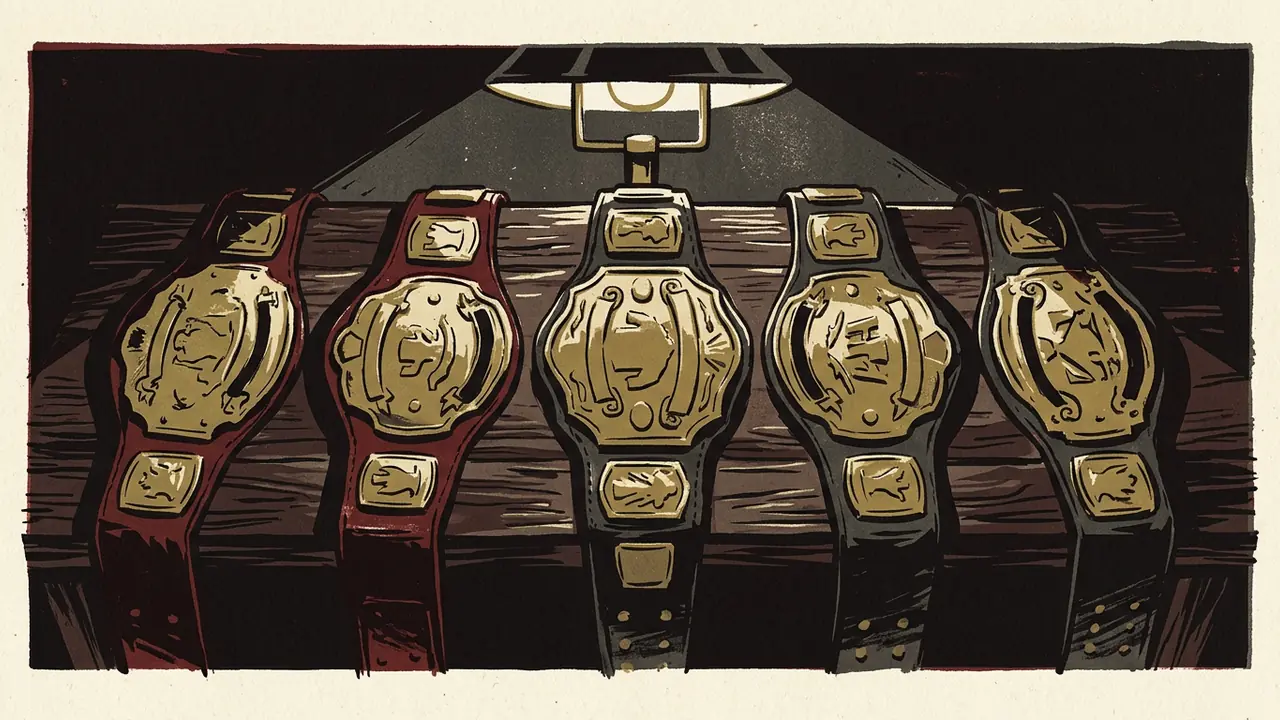
The WWF did not become a national promotion by winning a single war. It became national by changing the terms of the business: where it could be seen, where rivals could run, who could appear, and what the audience could buy. The expansion of the 1980s was a system, and every part of it was contested.
The inheritance and the ambition
The company Vince McMahon inherited was a Northeast promotion with deep roots. His father, Vincent J. McMahon, ran the World Wide Wrestling Federation, a successor to the Capitol Wrestling Corporation and a former NWA member. Its base was Madison Square Garden, its television reached the population centers of the Northeast, and its champion, Bruno Sammartino, drew for years. It was a strong territory, not a national business.
The younger McMahon bought the company from his father in 1982. He had worked in the business, promoted outside the family's core, and understood that the territory system was a set of local monopolies. The inheritance gave him a valuable asset: a television library, a Garden date, and a roster. The ambition was to stop treating those as a territory's privileges and start treating them as a national platform.
A territory with a Garden address
The WWF's strength was concentrated. It had arenas, TV slots, and a recognizable brand in the Northeast, but it did not have a national distribution system. The father's model was cautious: protect the home territory, work with other promoters, avoid provoking the alliance. The son's model was the opposite. The break was not just a business decision; it was a generational argument about what wrestling could be.
Cable changes the maths
National cable changed the unit economics. A promotion could reach millions of homes through one channel, and the value of a television slot no longer depended on a single city's audience. The WWF's relationship with USA Network gave it a national showcase; MTV gave it a youth-culture bridge. The old model was a circuit of arenas and a stack of local TV deals. The new model was one signal and a national audience.
Cable did not replace live events. It made them more valuable as a national product. A fan in a city without a territory could see the same stars, buy the same merchandise, and want the same pay-per-view. The promotion's leverage shifted from local promoters to the network and the advertiser. That shift is the heart of the expansion.
Merchandising followed the same logic. A national television audience could be sold a national line of shirts, posters, and toys; a territory could not. The WWF built licensing around characters it could show everywhere, and the merchandise reinforced the television brand.
One channel, many markets
The WWF still used syndication, but cable gave it a common identity. A viewer in Ohio and a viewer in New York could watch the same show and argue about the same angles. That common identity made the promotion feel national before it had national arena coverage. It also made the eventual arena tour easier to sell.
Buying and breaking the territories
The territory system was not destroyed in one day. The WWF bought television time, signed talent, and locked venues. Arena exclusivity was the sharpest tool. A promoter who could not book the building could not run the town. In some cases the WWF controlled the date through a lease or a contract; in most, exclusivity was the point. Ownership of buildings was rare; control of the calendar was not.
The deals were not always buyouts. Sometimes the WWF bought a promoter's television time or paid for a venue's exclusive rights. The result was the same: the local promotion lost its distribution. The promotion also raided. Stars from the AWA, Mid-South, and other territories were offered national exposure and better money. Some promoters sold out or folded; others allied against the WWF and lost.
The casualties were not just companies. Wrestlers who had built a career in one territory suddenly had a national market, but they also had a national employer with more leverage. The territory system had its own failures, but it spread risk across many promoters. The national model concentrated it.
The venue contract as a weapon
An exclusive arena deal did two things at once. It guaranteed the WWF a date and denied that date to a rival. The rival could not simply move to a smaller building; the smaller building was often the same building. The strategy was effective because it attacked the territory system at its weakest point: the local promoter's dependence on a handful of venues.
WrestleMania as a proof of concept
WrestleMania in March 1985 was the expansion's public test. The event was built around celebrity as much as wrestling. Mr. T and the Rock 'n' Wrestling Connection with Cyndi Lauper brought mainstream attention; Hulk Hogan gave the promotion a national hero. Closed-circuit broadcasts carried the show to theaters and arenas beyond Madison Square Garden.
The point was not the gate. The point was that a national audience would pay for a single event and that the mainstream press would treat it as a cultural story. WrestleMania proved that the WWF could sell a national product, not just a regional house show. It also proved that merchandising could travel with the television signal.
The celebrity layer
Celebrity was not decoration. It was a distribution strategy. A wrestler who appeared on MTV or in a mainstream newspaper reached viewers who did not watch the local wrestling show. The WWF used that reach to sell action figures, posters, and later pay-per-view. The celebrity layer made the promotion look bigger than its arena schedule.
What the expansion cost
Talent relations changed. The WWF classified wrestlers as independent contractors, which gave the company flexibility and the performers less security. The old territory system was exploitative in its own way, but it offered a local safety net: a wrestler could work one town, then another. The national market offered more money and less stability. The expansion concentrated power in the promoter.
State athletic commissions were another front. The WWF fought to be treated as entertainment rather than sport, which would remove commission oversight and its fees. McMahon's testimony in New Jersey in 1989 made the argument explicit. The company's legal position was that wrestling was scripted, and that the commissions should not regulate it as a sport. Rivals and regulators brought challenges; the WWF's arena contracts and talent deals were part of the record.
The family split
The expansion also broke the family's own model. The father had built a territory; the son built a national company. The break was philosophical as much as financial. By the time the national strategy was complete, the old territory logic was gone from the company's decisions. The family that had protected the Northeast territory now ran a business that treated every territory as a market to enter.
The cost was not a single lawsuit or a single lost promotion. It was a change in the assumptions of the business. The WWF national expansion made wrestling a television product first and a live product second. It made exclusivity a condition of survival. It made the promoter a national gatekeeper. The fans got a bigger stage; the territories got a choice: sell, join, or disappear.