Lucha libre: masks, weight and regional identity
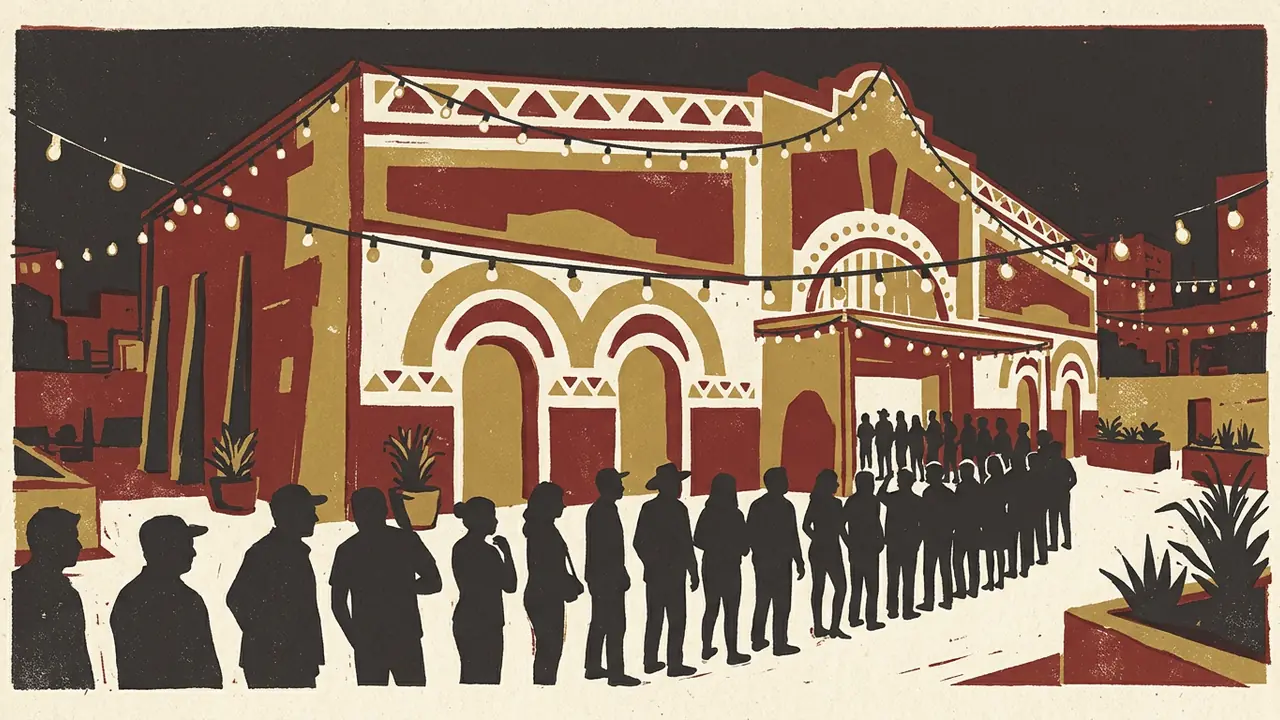
Lucha libre history is often told through its most recognizable image: the mask. That image is real, but it is also a commercial and narrative tool that took shape inside a specific circuit of arenas, regional promoters, and audience habits. Understanding the mask, the trios match, and the cross-border traffic around Mexican wrestling explains why so much of the wider industry now looks the way it does.
Origins and the arena circuit
Modern lucha libre took organized form in Mexico City in the 1930s, when promoter Salvador Lutteroth founded Empresa Mexicana de Lucha Libre. The company built a roster around imported American and European wrestling styles, then adapted them to Mexican audiences. The opening of Arena México in the 1950s gave the circuit a permanent flagship and a template for the arena show: a fixed weekly card, a loyal neighborhood audience, and a main event built around a wager.
Mexico City as the hub
Mexico City became the sport’s media and talent center, but the circuit was never only capital-based. Promotions in Guadalajara, Monterrey, Tijuana, Puebla, and other cities developed their own stars and their own loyalties. A luchador could build a following regionally before a Mexico City run made him a national name. That structure produced strong local identities and a steady exchange of talent between the capital and the provinces.
The arena culture shaped the work itself. Crowds were close to the ring, vocal, and familiar with the rules of the wager match. A card was not just a sequence of bouts; it was a set of escalating stakes. The apuestas match, where wrestlers bet masks or hair, gave the audience a reason to follow a feud across weeks. That habit of long-running, stakes-based storytelling is one of the foundations of the Mexican circuit.
The mask as a commercial asset
A mask is an identity, a secret, and a piece of merchandise at the same time. For the performer, it hides the face and allows a character to be larger than the person underneath. For the promoter, it creates a licensable image that can be sold as a toy, a poster, or a replica. The mask also creates scarcity: the face behind it is withheld, so the character retains an aura that a bare-faced performer cannot easily reproduce.
Anatomy of a mask match
The mask match is the clearest expression of that asset. Two masked wrestlers agree that the loser will remove his mask and reveal his face. The match is usually built over months, with challenges, tag matches, and confrontations that establish the stakes before the final bout. When the mask comes off, the character does not simply disappear; it changes. The performer may continue under a new identity, or the unmasking may become the defining moment of a career.
Mask versus hair is the companion stipulation. A masked wrestler risks his anonymity; an unmasked wrestler risks his hair and his pride. Both are wagers the audience can understand without a title being involved. The mask match also protects the promotion from over-relying on championships: a title can change hands repeatedly, but a lost mask is a one-time event. That makes the mask a finite resource, and promotions have historically treated it that way.
The commercial value extends beyond the arena. Masks are sold at merchandise stands, in markets, and through licensed products. Famous masks become recognizable outside wrestling, and the families behind them sometimes maintain the character across generations. The mask is therefore both a performance tool and a brand asset, which is why promotions guard the rights to a mask design as carefully as they guard a championship belt.
Trios and the team format
Three-person teams are the default unit of Mexican wrestling. The trios match, usually a six-man tag with two teams of three, allows a promotion to put more performers on a card without stretching a singles feud. It also solves a practical problem: a roster with many specialized styles can mix them in one match. A high-flyer, a technician, and a brawler can share a team, and the audience gets a contrast that a singles match cannot provide.
Why three?
Three is the smallest number that allows a genuine team structure without requiring a full tag-team division. In a trios match, one wrestler can work the crowd while another sets up a dive, and the third can act as the base for a double-team move. The format also makes it easier to hide a weaker worker or to protect a young performer. The experienced hands can carry the structure while the newcomer takes the spotlight for a few minutes.
Trios titles and trios tournaments are common in Mexico for the same reason. They give the promotion a championship that can be defended regularly without committing to a long singles program. The two-out-of-three-falls rule, standard in Mexican wrestling, fits the trios format well: it gives the match natural breaks and allows a team to lose the first fall and still build a comeback. The result is a flexible, repeatable match type that can absorb different styles and different levels of experience.
Exports and imports
Lucha libre has traveled in both directions. Mexican performers have worked in the United States, Japan, and Europe for decades, carrying the mask, the trios format, and the aerial style with them. In the 1990s, Mexican talent became a central part of the American cruiserweight boom, and the masked high-flyer became a familiar figure on national television. That exposure introduced a new generation of English-speaking fans to the mask match and the trios match.
Foreign styles have also entered Mexico. American brawling, Japanese junior heavyweight wrestling, and Canadian mat work have all influenced Mexican performers, and Mexican promotions have regularly imported foreign talent. The exchange is not a one-way street. A luchador who works in Japan may return with a different approach to pacing; a Mexican promotion may use a foreign star to draw a different audience. The result is a circuit that has always been porous, even when it presents itself as a closed tradition.
The cross-border exchange has not always been smooth. Mexican performers in the United States have sometimes been asked to simplify their style or to work without the mask. Promotions have sometimes treated lucha libre as a novelty rather than a system. But the traffic has continued, and the most successful exports have been the ones who kept the mask’s storytelling and the trios structure intact while adapting to a new audience.
What lucha gave the wider industry
The most visible contribution is the aerial vocabulary. Dives, rope work, and the timing of a high-risk move are now standard across the industry, and much of that vocabulary was refined in Mexican arenas. The trios format also gave the wider industry a model for multi-person matches that are more than a chaotic sprint. The structure of the six-man tag, with its tags, saves, and double-team sequences, has influenced team wrestling far beyond Mexico.
The mask gave the industry a way to tell stories about identity and stakes. A mask match is a simple, legible bet: the loser loses his face. That idea has been borrowed by promotions around the world, sometimes well and sometimes as a gimmick. The mask also showed that a character can be a commercial property without being a household name. The mask is the product, the story, and the souvenir at once.
Lucha libre history is not a single lineage. It is a set of regional circuits, a commercial system built around masks and wagers, and a working style that has been exported and reimported for decades. The mask, the trios match, and the arena culture are the clearest pieces of that history, and they remain the most useful entry points for anyone trying to understand why Mexican wrestling looks the way it does.