Wrestling on television: the medium that made the business
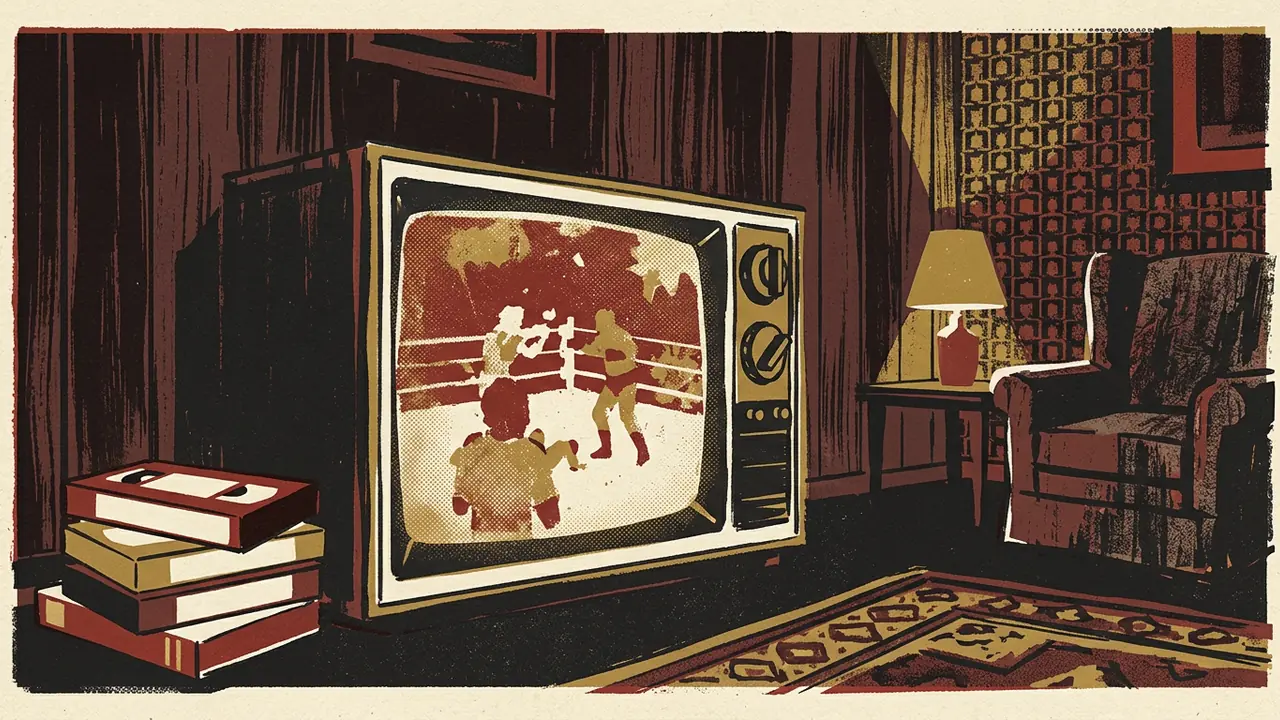
Wrestling and television have been in business together since the first program director needed something to fill an afternoon. The relationship has never been a simple one of broadcaster and supplier. Follow wrestling on television history closely and a single question keeps recurring: who pays for the cameras, and what are the cameras supposed to sell? For seventy years the answer has changed three times, and each change rewrote what a wrestling company was.
The pattern is circular in a way that surprises people who assume television simply made wrestling bigger. Television first existed to sell tickets to a building. Then it existed to sell advertising against an audience. Then it existed to sell subscriptions to a monthly event, and then to a streaming service. Each layer did not replace the one before it so much as stack on top, until the whole structure depended on a contract with a distributor that the promoter did not control.
Local studio shows
The first wrestling broadcasts were filler. In the late 1940s, as stations signed on across the country, they needed hours of cheap programming, and a promoter could supply it for almost nothing. He brought his own ring, his own wrestlers, and his own announcer to a studio the size of a garage. The station paid nothing for the content. The promoter paid nothing for the airtime. Both got something they wanted.
For the promoter, the value was promotional. A Thursday night show advertised Friday's card at the armory, and a wrestler who looked convincing on a nine-inch screen could draw a paying crowd. Markets like Chicago, Los Angeles, and Buffalo built strong local programs on that trade. The DuMont network carried wrestling on a national scale during its brief life, and by the early 1950s the business was reaching audiences it had never imagined.
The promoter as producer
Because the promoter controlled the production, he controlled how his product looked. He chose the angles, the lighting, and the talent. That arrangement sounds like leverage, and it was, but only in the narrow space of a single station in a single city. The moment a broadcaster could get wrestling from somewhere else, or decided the audience for it was not worth the slot, the promoter had nothing to fall back on. The 1950s contraction in the bigger cities made that clear: several promoters who had leaned on television found the live gate softening and the station indifferent.
Syndication and the national reach
The next step was distribution rather than production. A promotion could tape a show and sell it market by market to independent stations, extending its name past its own territory without building a network. This was how a regional business began to think of itself nationally, and it created a slow-motion contest between promoters who were competing for the same syndicated slots.
The decisive move came from cable. Ted Turner's Atlanta station was carried on cable systems far outside Georgia, which turned a local wrestling program into a national one at no extra cost to the promotion that produced it. Vince McMahon's purchase of that time slot in 1984 is often told as a story about ambition. It is just as fairly told as a story about access to a distribution channel that a rival had built.
Why cable came next
Cable solved the two problems that syndication could not. A cable channel could deliver a stable national clearance at a predictable time, and it could be paid for by subscriber fees as well as advertising. For a promoter, that meant a show could be a revenue line rather than a marketing expense, provided the ratings justified the carriage.
Cable and the weekly live show
Once a wrestling program sat in a fixed weekly slot on a cable channel, the economics shifted from selling tickets to selling attention. The show existed to hold an audience that the network could sell to advertisers and the promoter could sell to pay-per-view. Ratings became the currency, and with them came pressure over content: the same product that drew young men in large numbers also drew advertiser nervousness, which is why the company's television rating drifted toward a family-friendly presentation in later years.
The weekly show also made the roster visible in a way that house shows never could, which raised the value of the top few performers and flattened everyone else. A live broadcast, with its unscripted mistakes and its real-time crowd, proved more valuable than a taped one, and by the mid-1990s the major companies were going head to head on Monday nights with live programming.
Pay-per-view as a revenue layer
The big-event model grew out of closed-circuit theater distribution and matured into pay-per-view, which asked cable subscribers to pay a premium for a single night. It worked because the monthly card gave the weekly show something to build toward, turning television into a long advertisement for a purchase. The 1985 WrestleMania demonstrated the scale a promoter could reach by combining a cable audience with closed-circuit venues.
The ceiling was structural. Revenue depended on how many homes had cable, how many of those bought the show, and how many watched without paying. Every month required a new main event convincing enough to justify the price, and the pressure to deliver that match shaped storylines more than any creative instinct did.
Streaming and the end of the slot
A subscription service removed the middleman and the slot at once. A company that sold its own streaming product collected revenue directly from viewers and no longer needed a channel to grant it a time. The trade-off was that it now competed for attention with everything else on a subscriber's screen rather than with whatever aired opposite it, and it had to persuade people to keep paying every month.
The later shift was toward licensing the library and the live events to a large general-interest streamer, which restored a familiar arrangement: the distributor writes the check and the promotion delivers the audience. What has changed is the absence of a channel, a lead-in, and a fixed night. Wrestling on television began as free content for a station with dead air. It ends, for now, as a subscription driver bundled inside someone else's app, still selling something to someone, still dependent on a deal it does not sign alone.