Professional wrestling in the 2020s
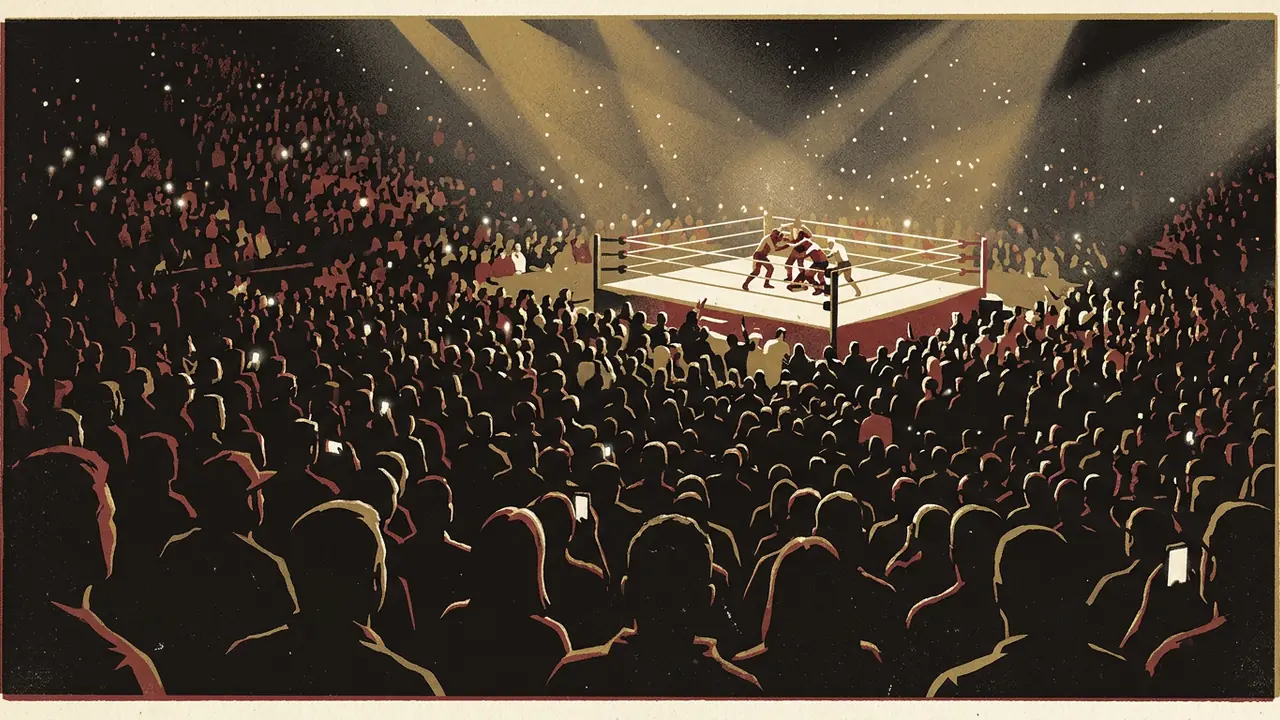
Professional wrestling entered the 2020s selling tickets and spent the first half of the decade learning to sell television time instead. The change was not a strategy anyone chose. It was forced by empty arenas in 2020, then accelerated by streamers willing to pay for live content and by a second national promotion that made talent scarce again. The decade's history so far is the story of how those three pressures reshaped the business.
The pandemic shock
In March 2020, with travel shutting down and state governments restricting gatherings, both major American promotions moved to closed sets within days of each other. WWE ran Raw and SmackDown from the Performance Center in Orlando and turned WrestleMania 36 into a two-night event taped without an audience. AEW, less than a year into its television run, settled into Daily's Place in Jacksonville and used its own roster as the crowd. NXT stayed at Full Sail University, where it had been taping for years.
The improvisation lasted longer than anyone expected. WWE built the ThunderDome in August 2020, a virtual audience of LED screens that followed the company from Orlando to Tampa to St. Petersburg. AEW stayed in Jacksonville into 2021, running outdoor shows with spaced seating before returning to touring. For roughly eighteen months, the industry's core product was television made in near-silence.
Television without an audience
Empty arenas pushed bookers toward the taped and the cinematic. WWE's Boneyard Match and Firefly Fun House match at WrestleMania 36 were filmed set pieces rather than wrestling matches, and the format briefly spread across both companies. More important was the quieter lesson: with touring costs gone, WWE's profits rose in 2020 even as revenue fell. The live event machine that had always been expensive simply stopped, and the company discovered how much of its income came from contracts rather than gates.
Rights fees as the core business
WWE had already restructured around television before the pandemic. SmackDown moved to Fox in 2019, Raw stayed on USA, and NXT joined the USA lineup that September. In 2021 the company sold the American rights to its streaming library to Peacock, folding the WWE Network into a larger service and taking a rights fee instead of running a subscription business. By 2024 the whole domestic package had been renegotiated: SmackDown to USA, NXT to The CW, and Raw to Netflix from January 2025.
AEW followed the same path from the other direction. Its WarnerMedia deal, signed before the promotion had ever run a show, was renewed with Warner Bros. Discovery in 2024 and extended to streaming on Max. For both companies, the money that mattered came from distributors, not from ticket buyers.
Why live wrestling fits streaming
Live wrestling offers streamers something scripted libraries cannot: weekly, DVR-proof programming with an audience that watches on the night and an ad load that sells. It is also cheap relative to major league sports, where the same hours cost many times more. Netflix's entry into live wrestling, and the broader scramble for sports rights, made the 2020s the first decade in which wrestling's biggest business risk was being undervalued by a distributor rather than overexposed by a promoter.
A second national promotion
All Elite Wrestling launched in 2019, but the 2020s made it a genuine alternative. The promotion survived the pandemic without a touring base, then expanded: a second weekly show in 2021, the purchase of Ring of Honor in 2022, a third television hour with Collision in 2023, and a stadium show at Wembley that turned into an annual London event. Cross-promotional cards with New Japan Pro-Wrestling gave the company an international footprint no American start-up had managed since the 1990s.
WWE's response was initially direct. NXT had been positioned against AEW's Wednesday show since 2019, and the two products traded audience for a year and a half. The arrival of a credible second buyer for talent changed the terms of every contract negotiation in the industry, whether or not fans watched both shows.
The end of the Wednesday wars
NXT moved to Tuesdays in 2021, and the head-to-head framing faded. Competition did not. It scattered across the week and across the calendar, showing up in pay-per-view dates, in international touring, and in the quiet contest to sign the same handful of free agents.
The talent market
Free agency became real again. Cody Rhodes returned to WWE in 2022 after helping build AEW; CM Punk went back to WWE in 2023 after his AEW departure; Jade Cargill moved from AEW to WWE. In the other direction, AEW signed Will Ospreay, Kazuchika Okada, and Mercedes Moné within months of each other in 2024. Wrestlers who would once have had one buyer now had two, and leverage followed.
Contract structures shifted with it. Guaranteed money, shorter terms, and the ability to test the market became standard talking points in negotiations, and WWE's release waves of 2020 and 2021 sent a generation of talent through AEW, Impact, New Japan, and the independents before some of them returned. WWE also built a college recruitment pipeline through name, image, and likeness deals, competing for athletes who had never worked a match.
Where the decade is heading
Both companies now earn most of their money from distributors and spend it on content. WWE under TKO, the parent created by the 2023 merger with UFC, has emphasized cost discipline and international premium live events in Cardiff, Perth, Lyon, and Berlin. AEW has pushed into Australia and continues to run London annually. Global reach is the growth story; thinner margins are the risk, because rights fees attract competitors and rising roster costs eat into the windfall.
The decade's governance questions remain unsettled. A January 2024 lawsuit against Vince McMahon led to his resignation from TKO and from his roles at WWE, removing the figure who had controlled the company's creative direction for four decades. How the next round of rights negotiations, and the next wave of free agents, divide between two promotions and a handful of streamers will define the rest of the 2020s.