The National Wrestling Alliance: rise, peak and slow unravelling
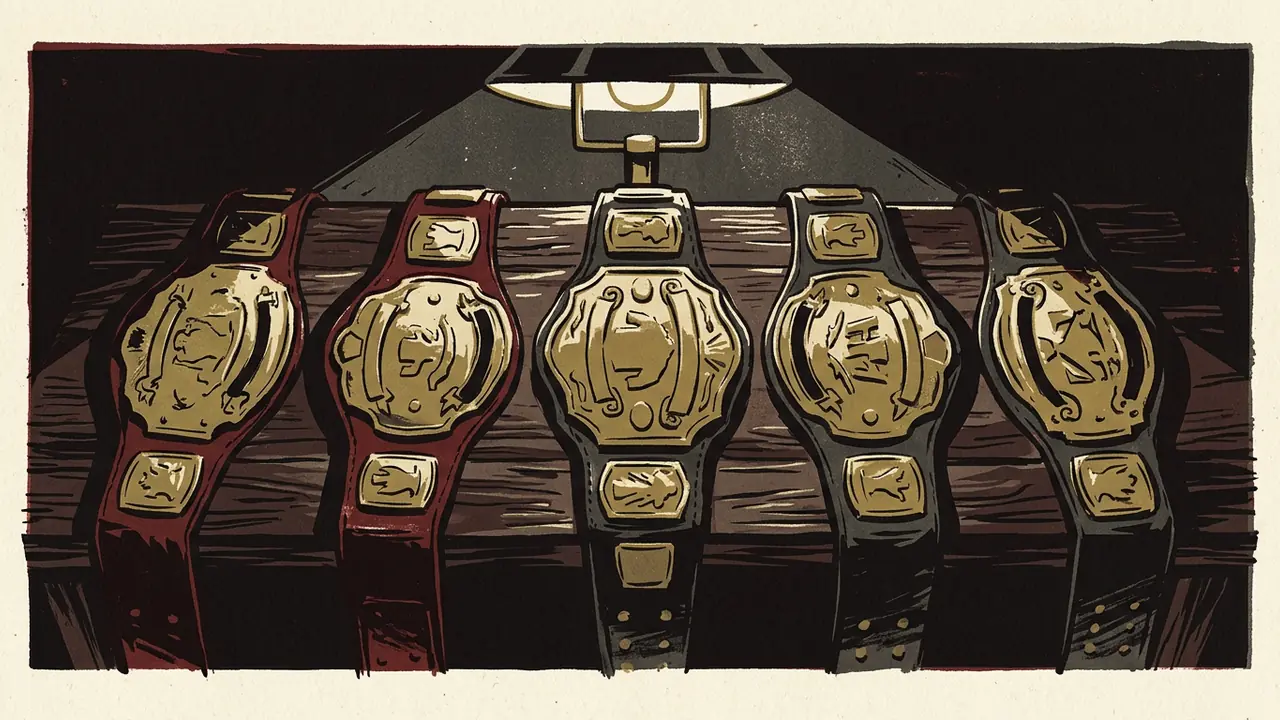
The National Wrestling Alliance was never a company in the sense that fans understand the term today. It was an agreement among promoters, formalized in 1948, to stop raiding each other and to recognize a single world champion between them. For roughly three decades that agreement functioned as the closest thing American wrestling had to a governing body. Its slow unraveling explains a great deal about the industry that replaced it.
Founding and the recognition rule
The alliance grew out of meetings among Midwestern and Eastern promoters, organized largely by Paul "Pinkie" George of Iowa, who wanted an end to the expensive practice of invading each other's towns. Orville Brown, a heavyweight from the Kansas City end of the business, was recognized as the first champion. The founding was not idealistic. It was a cartel, and the honest way to describe a cartel is a group of businesses agreeing not to compete on the things that cost them the most money.
What membership actually bought
A member got a protected home market and the right to run shows there without a rival promoter moving in behind him. He also got access to a traveling world champion who could main-event a spot show and send the local challenger home looking strong. In exchange, he agreed not to promote inside another member's territory, not to sign another member's talent without permission, and to recognize the alliance's champion as the only world champion in his area. Enforcement came through a board and a president, and through the simplest leverage of all: lose your standing and you lose the champion.
The name itself had value. A promoter in a mid-sized city could advertise an NWA world title match and inherit decades of credibility he had not built himself.
The world champion as a shared product
The champion's job looked nothing like a modern title reign. He was not the centerpiece of one company's weekly television; he was a touring attraction, booked into one territory after another and matched against each region's top babyface. The champion usually left town by count-out or disqualification, or won after a hard fight, so the local hero absorbed no real damage. Title changes were decided collectively rather than by a single owner, which kept the belt from becoming one promoter's marketing tool.
The champion's calendar
Lou Thesz dominated the position through the 1950s, holding the championship across three separate reigns, and the pattern held for the men who followed: Whipper Billy Watson, Pat O'Connor, Buddy Rogers, Gene Kiniski, Dory Funk Jr., Harley Race, Jack Brisco, Terry Funk, Dusty Rhodes and Ric Flair. A champion might work a different city nearly every night against a different local name. He was paid a share of the gate rather than a company salary, which meant his income depended on the health of the whole loop rather than on any single promotion.
That arrangement made the title a genuinely shared asset. It also meant the champion owed loyalty to a committee, not to an employer.
The alliance at its peak
From the 1950s into the early 1980s, the NWA's map covered most of the United States, with working relationships extending into Canada, Mexico and Japan. Sam Muchnick, the St. Louis promoter, served as president for most of the 1950s and 1960s and is generally credited with holding the coalition together through its strongest years. Members ranged from operations running major arenas to small outfits working armories and fairgrounds.
Local television, national name
Television in that era was local and syndicated, which suited the system perfectly. A promoter's TV show existed to sell tickets in his own market, not to build a national audience that might attract a competitor's attention. The alliance supplied the one thing local television could not: a championship with continental prestige attached to it.
The result was coast-to-coast coverage of a single title without a national company owning it. That is the achievement people mean when they talk about the NWA's peak, and it has not been repeated since.
Cracks: cable, pay-per-view and defection
The first serious break came early. Capitol Wrestling Corporation in the northeast withdrew from the alliance in 1963 and built itself around its own champion, eventually becoming the World Wrestling Federation. The larger rupture arrived in the 1980s, when cable gave a single promotion the ability to reach the entire country at once. Vince McMahon's WWF bought national cable time and used pay-per-view events to convert that reach into revenue no territory could match.
When a member owns the network
Jim Crockett Promotions, the alliance's strongest member, moved onto national cable via TBS and then sold out to Turner Broadcasting, becoming World Championship Wrestling in 1988. Once a member controlled a national slot, the shared champion stopped being an asset and started being an employee. A promoter with his own television and his own pay-per-view no longer needed a committee's permission to make a star.
The belt leaves the building
In 1991 Ric Flair, then the NWA champion, left for the WWF and carried the physical championship belt with him, touching off a dispute over who actually held the title. WCW's relationship with the alliance deteriorated and ended in 1993. The NWA tried to relaunch the following year with a tournament in Philadelphia; Shane Douglas won it, threw the championship down, and renamed the promotion Extreme Championship Wrestling. The gesture is remembered because it was accurate: the belt no longer meant what it had meant.
What the NWA is today
The alliance still exists as a brand. Billy Corgan's Lightning One acquired it in 2017, and the company has since run a small roster, a weekly studio show and periodic pay-per-view events. Earlier, the titles had been licensed to Total Nonstop Action Wrestling during the 2000s, a period in which the NWA name appeared on national television without the alliance structure that once gave it meaning.
There is no board of promoters allocating a champion's calendar anymore. There is a title lineage that reaches back to 1948 and a name that still carries weight with the audience that knows the history. The NWA's past is considerably longer than its present, and that is the useful thing to understand about it. Its list of champions is effectively a map of twentieth-century American wrestling, drawn at a time when no single company could own the whole country.